

A New Generation of Watch Buyers Is Looking Beyond the Name on the Dial
For decades, the watch world was dominated by a relatively small group of famous names. Swiss heritage, recognizable logos and decades—sometimes centuries—of history played a major role in determining what collectors considered a “good watch.”
That is beginning to change.
In 2026, some of the most interesting activity in the watch industry is coming from smaller independent and microbrand watch companies. Watch enthusiasts are discovering that an interesting timepiece doesn't necessarily need to come from one of the world's largest luxury brands.
Instead, more buyers are asking a different question:
What am I actually getting for my money?
Materials Matter More Than the Logo
Today's watch buyer has access to more information than ever.
Enthusiasts understand the difference between mineral glass and sapphire crystal. They know about 316L stainless steel. They recognize movement manufacturers such as Seiko/TMI and Miyota. They compare automatic, mechanical and quartz movements, water resistance, case construction and finishing.
That knowledge has helped level the playing field.
A smaller watch company can now build a watch using many of the same proven materials and components enthusiasts look for without carrying the overhead, retail distribution system and marketing expenses associated with a major international luxury brand.
For the customer, that can mean considerably more watch for the money.
Microbrands Are Becoming More Original
The early microbrand market was filled with watches that looked very similar to established luxury models.
That isn't enough anymore.
Today's enthusiast increasingly wants something different—a distinctive dial, an unusual color, an interesting story or a watch they aren't going to see on everyone else's wrist.
That's one reason independent watchmaking has become such an interesting part of the industry.
Smaller companies can experiment.
They can produce watches in smaller quantities, try different dial designs and colors, use unconventional combinations and respond more quickly to what customers actually want.
Sometimes the result is a watch that feels considerably more personal than something produced by the hundreds of thousands.
The Return of the Wearable Watch
Another interesting change is happening in watch size.
For years, bigger seemed to be better. Cases of 42mm, 44mm and even larger became commonplace.
Now the pendulum is moving back.
Many new watches are appearing in the 34mm to 40mm range, with manufacturers paying more attention to thickness, proportion and how a watch actually feels on the wrist.
For many enthusiasts, that's a welcome development.
A watch doesn't need to dominate your wrist to have presence. Good dial proportions, the right case design and thoughtful finishing can make a 38mm or 40mm watch every bit as interesting as a much larger timepiece.
Color Is Back
Blue and green dials have become staples of modern watchmaking, but 2026 is bringing even more experimentation.
Burgundy, champagne, warm beige and other rich colors are appearing alongside traditional black, white and silver.
Texture is becoming equally important.
Sunburst finishes, patterned dials and other treatments can completely change a watch as the light moves across it.
For enthusiasts, that makes choosing a watch less about simply matching an outfit and more about finding something with personality.
Quartz or Automatic? Maybe We're Asking the Wrong Question
Watch enthusiasts love mechanical movements—and for good reason. There is something fascinating about a tiny mechanical machine operating continuously on your wrist.
But quartz deserves more respect than it sometimes receives.
Modern quartz movements can provide outstanding accuracy, reliability and convenience. Sweeping-second quartz movements have also blurred some of the visual distinction between traditional quartz and mechanical watches.
The better question isn't necessarily whether quartz or automatic is “better.”
It's whether the movement makes sense for the watch.
A well-designed everyday quartz watch can be every bit as enjoyable to own as an automatic watch. Likewise, seeing and feeling a mechanical movement operating on your wrist remains one of the unique pleasures of traditional watchmaking.
There is room for both.
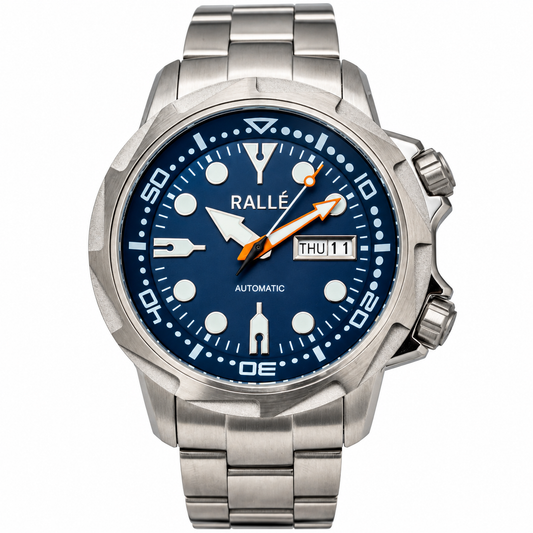
Where RALLÉ Fits Into This Changing Watch World
Here at RALLÉ Watches in Manchester, New Hampshire, we find this change in the watch industry particularly exciting.
We are a small American watch company, and we don't pretend to have 150 years of Swiss history behind our name.
Instead, we're building our own history.
Our philosophy is straightforward: use proven materials and dependable movements, create watches with personality, and price them so people can actually enjoy wearing them.
That means using materials such as sapphire crystal and 316L stainless steel along with trusted movements from manufacturers such as Seiko/TMI and Miyota in many of our designs.
It also gives us the freedom to experiment.
Some RALLÉ watches are inspired by New Hampshire and New England. Others are traditional divers, dress watches or everyday pieces. We can work with different movements, dial colors and designs because we aren't trying to make every watch appeal to millions of people.
Sometimes a watch only needs to connect with the person wearing it.
The Future of Watch Collecting May Be More Personal
There will always be a place for the great historic watchmakers. Their contribution to horology is undeniable, and many produce extraordinary watches.
But they no longer have the entire conversation to themselves.
The internet has given smaller manufacturers the ability to reach enthusiasts directly, while today's buyers have become knowledgeable enough to judge a watch on its construction, movement, materials and design—not simply the name printed beneath 12 o'clock.
And that may be one of the healthiest developments the watch industry has seen in years.
Because ultimately, a watch should be something you enjoy looking at every time you raise your wrist.
Whether it costs $200 or $20,000, whether it comes from Switzerland, Japan or a small watch company in Manchester, New Hampshire, the best watch is the one that makes you want to wear it.
RALLÉ WATCHES “View the RALLÉ Hawthorne Watch.”
Built With Better Materials. Priced Without the Markup.


