
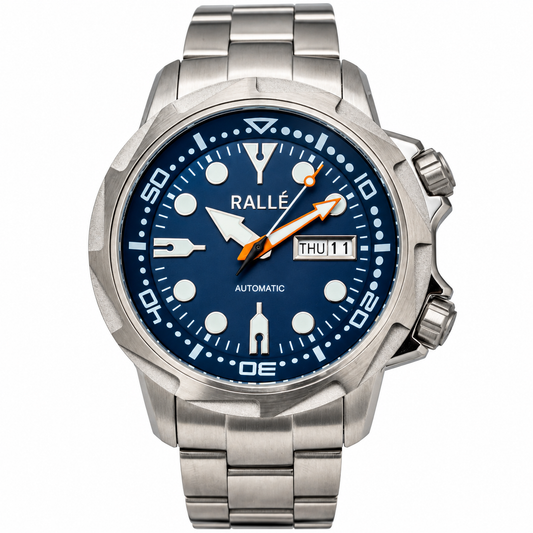

What Makes a Quality Watch? 7 Things to Look for Before You Buy
Buying a watch can be confusing.
Prices can range from under $100 to tens of thousands of dollars, and a higher price doesn't always mean you're getting a better-built watch. A famous name on the dial can certainly carry history and prestige, but if you're interested in the actual watch you're buying, there are several things worth looking at before making your decision.
Here are seven things that can help you recognize a quality watch.
1. Start With the Crystal
The crystal is the clear surface protecting the dial, and it takes more everyday abuse than almost any other part of the watch.
You'll commonly see acrylic, mineral glass and sapphire crystal.
Acrylic is inexpensive and can scratch relatively easily. Mineral glass provides better scratch resistance, but sapphire is generally considered the premium choice because of its excellent resistance to everyday scratching.
For a watch you plan to wear regularly, sapphire crystal is one specification worth looking for.
At RALLÉ Watches, sapphire crystal is something we use extensively because we believe the part of the watch you look through every day should remain looking good for years.
2. Look at the Case Material
Not all shiny metal watch cases are created equal.
One material you'll frequently see in better watches is 316L stainless steel. It's widely used in watchmaking because it offers an excellent combination of corrosion resistance, durability and appearance.
It's also important to look beyond the case itself.
Check the bracelet, clasp, crown and caseback. These components contribute greatly to how substantial a watch feels and how well it holds up over time.
A quality watch should feel solid without simply being heavy for the sake of feeling expensive.
3. Know What's Powering the Watch
The movement is the engine inside the watch.
Automatic movements use the motion of your wrist to wind a mechanical mechanism. Traditional hand-wound mechanical movements require winding by the wearer. Quartz movements use a battery and electronic regulation to provide excellent accuracy and convenience.
None of these automatically makes a watch good or bad.
What matters is the quality and reliability of the particular movement.
Established manufacturers such as Seiko/TMI, Miyota and Sellita have produced movements used throughout the watch industry. Their movements are well understood, and many can be serviced or replaced without turning a simple repair into a major undertaking.
At RALLÉ, we would rather use a proven movement with a track record than an unknown movement simply because it costs less.
4. Pay Attention to the Dial
The dial is where a watch develops its personality.
Look closely at the printing, hour markers, hands and alignment. Are the markers straight? Does the printing look sharp? Do the hands properly line up with the indices?
Then look at the finish.
Sunburst dials interact with light differently from matte dials. Textured and patterned surfaces can give a watch depth. Applied markers can create shadows and reflections that aren't possible with simple printed indices.
A good dial doesn't necessarily need to be complicated.
Sometimes the simplest dial is the hardest one to get right.
5. Understand Water Resistance
Water resistance is one of the most misunderstood watch specifications.
A watch marked 30 meters doesn't necessarily mean you should take it 30 meters underwater.
Instead, think about how you're actually going to use the watch.
For an everyday dress watch, basic water resistance may be perfectly adequate for normal daily exposure. If you're swimming, boating or spending considerable time around water, greater water resistance and the appropriate case and crown construction become much more important.
Choose the specification based on your lifestyle rather than simply looking for the biggest number.
6. Don't Ignore the Bracelet or Strap
A great watch on a poor bracelet can still feel like a poor watch.
The bracelet or strap is your physical connection to the watch all day.
With a metal bracelet, look at the construction of the links, clasp, adjustment and how smoothly everything articulates around your wrist.
With leather and other straps, look at the material, stitching, flexibility and hardware.
Comfort matters.
A watch can have impressive specifications, but if it isn't comfortable, eventually it stays in the drawer.
And a watch sitting in a drawer isn't doing its job.
7. Finally, Ask Whether the Price Makes Sense
This may be the most important question of all.
You're not simply buying steel, glass and a movement. Design, manufacturing, finishing, customer service, warranty, distribution, marketing and brand history all contribute to the price of a watch.
Luxury brands can also command substantial premiums because of their heritage and name recognition.
There is nothing wrong with paying for that if it's important to you.
But it isn't the only way to buy a good watch.
Independent and microbrand watch companies have created another option. By selling more directly and operating on a smaller scale, these companies can often put more of the purchase price into the specifications and construction of the watch.
Look Beyond the Name on the Dial
The next time you're considering a watch, turn it over, read the specifications and ask a few questions.
What is the crystal made from?
What material is the case?
Who made the movement?
How is the dial finished?
What level of water resistance does it offer?
How does the bracelet or strap feel?
And finally:
Am I getting a well-built watch for the money I'm spending?
Those questions can tell you considerably more about a watch than the logo alone.
How We Approach It at RALLÉ
At RALLÉ Watches in Manchester, New Hampshire, we're a small American watch company building our reputation one watch at a time.
Our approach is simple.
Use proven materials. Use dependable movements. Create interesting watches. And keep the price reasonable.
That's why you'll find specifications such as sapphire crystal, 316L stainless steel and movements from established manufacturers including Seiko/TMI, Miyota and Sellita throughout our collection.
We're watch people too, and we believe you should know what you're getting when you buy one.
Because whether your watch costs a few hundred dollars or several thousand, ultimately a quality watch should do three things well:
Keep good time. Hold up to everyday life. And make you want to put it on your wrist every morning.
RALLÉ WATCHES Visit the RALLÉ Seaway Watch
Built With Better Materials. Priced Without the Markup.


